World
Heidenau city council in Germany halted placement of new stumbling stones for Holocaust victims
The Heidenau city council in Saxony decided by secret ballot, by a majority of 13 to 6 with one abstention, not to permit further placement of stumbling stones on the city's streets to commemorate Nazi victims. The proposal was submitted by CDU and AfD representatives alongside members of the Oberlausitz Alliance, who seek to concentrate commemoration at the northern cemetery. The decision drew sharp criticism, including from the International Auschwitz Committee, and the Israeli embassy in Germany opposed the initiative before the vote.
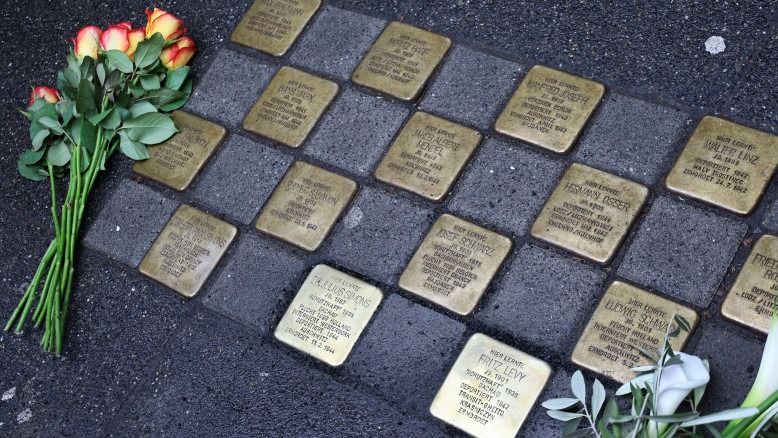
· Source: Maariv. Photo as published in the article
The Heidenau city council in Saxony decided to reject placement of new stumbling stones on the streets and instead concentrate commemoration of Nazi victims in a cemetery, a decision preceded by CDU and AfD representatives that sparked sharp criticism in Germany.
The Heidenau city council in Saxony decided not to allow the placement of new stumbling stones in public streets and sidewalks in the city henceforth, and instead concentrate commemoration of Nazi victims at a memorial site in the northern cemetery, in a manner that would prevent people from stepping on the memorial plaques. The proposal was preceded in part by CDU and AfD representatives.
The initiative's sponsors argued that residents, relatives and various commemorative initiatives no longer see the stumbling stones as an appropriate form of remembrance, in part because passersby step on the names of the murdered and persecuted. The city administration recommended that council members reject the proposal and argued that commemoration should remain 'visible and present in public space.'
In Heidenau, a town near Dresden, five stumbling stones had been placed to date. The first was laid in 2021 outside city hall in memory of Paul Gröger, the town's first mayor, who was dismissed from his post after the Nazi rise to power, arrested in June 1933 and sent to the Hohenstein concentration camp, where he suffered severe abuse. Shortly after his release from the camp, on August 27, 1933, he ended his life.
Other stones in the town commemorate members of the Jewish Reiner family and were placed following a student initiative. Local activists sought in recent years to expand the project and commemorate additional victims, including Martha and Fritz Goldstein, with a request on the matter submitted to the city in February 2025, with the initiators even offering to fund the stones and work costs themselves. The decision sparked sharp criticism, with the International Auschwitz Committee describing it as an attempt to once again remove Nazi victims from the city center, and criticizing in particular the cooperation between CDU and AfD representatives on the matter.
Source: Maariv