World
Three researchers win 2026 Nobel Prize in Medicine for controlling nerve cells through light
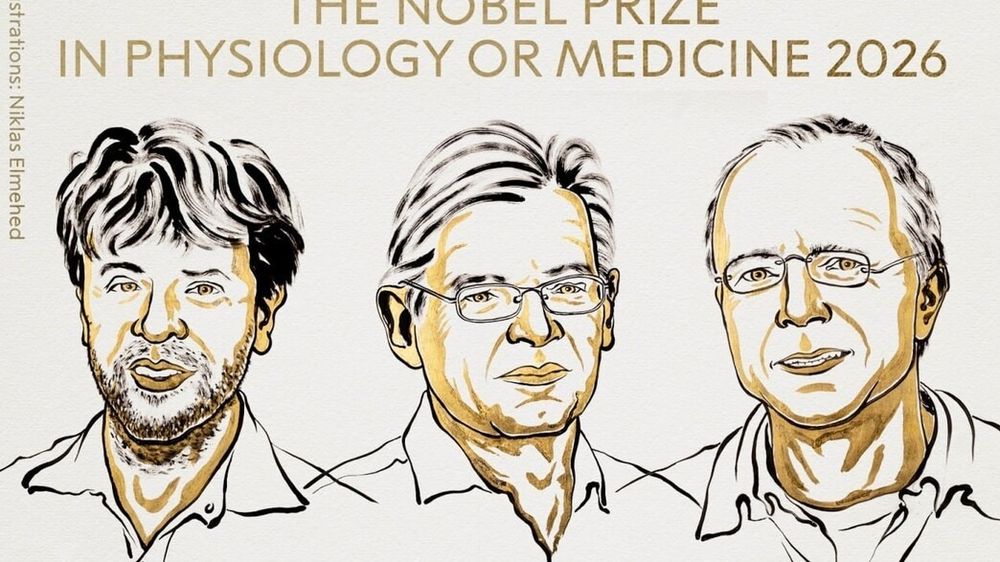
American Karl Deisseroth and Germans Peter Hegemann and Georg Nagel won the prize for developing optogenetics, a method enabling turning nerve cells in the living brain on and off using light rays. The discovery began with a protein in a single-celled alga that, when illuminated with blue light, opens a channel. Using the method, researchers map circuits in the brain linked to neurological and psychiatric disorders, and the winners will split 12 million Swedish kronor.
· Source: Maariv. Illustration: Niklas Elmehed, Nobel Prize Outreach
The Nobel Prize in Medicine and Physiology for 2026 was awarded today jointly to American Karl Deisseroth and Germans Peter Hegemann and Georg Nagel, for discoveries in the field of light-dependent ion channels and development of the optogenetics method, enabling turning nerve cells in the living brain on and off using light rays.
The award was announced today by the Assembly of the Karolinska Institute in Sweden, as reported by Reuters. The winners will split 12 million Swedish kronor, which is about 1.2 million dollars.
According to reports, the breakthrough began with Peter Hegemann's curiosity about how 'Chlamydomonas,' a single-celled alga, is able to swim toward a light source. In the early 2000s, Hegemann and Nagel discovered channelrhodopsin, a protein on the surface of the alga's cell that, when illuminated with blue light, opens a channel through which charged ions flow into the cell and create an electrical impulse.
Subsequently, brain researcher Karl Deisseroth from Stanford University introduced the gene producing the protein into nerve cells of mice and succeeded in evoking a nerve signal in them using blue light. The finding was published in 2005, and two years later Deisseroth activated the method in the brains of freely moving mice.
According to reports, researchers are now mapping using the method neural circuits controlling memories, emotions and behaviors linked to neurological and psychiatric disorders, and it also serves in attempts to restore vision to those suffering from vision impairments and blindness. Chair of the Medicine Prize Committee Per Svennstrom noted that optogenetics provides exceptional opportunities for mapping the human brain.
Source: Maariv